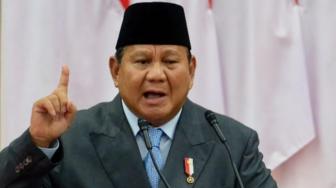
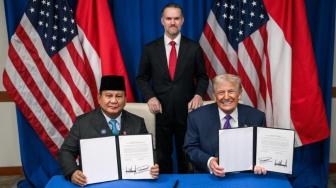
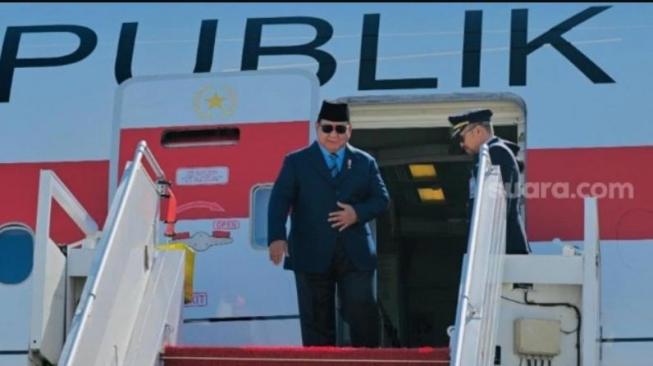
President Prabowo Subianto has made international engagement a defining feature of his presidency, embarking on a series of overseas visits aimed at strengthening Indonesia's diplomatic, economic, and strategic partnerships.
Since taking office, Prabowo has travelled extensively across Asia, Europe, the Middle East, and the Americas, attending international summits, bilateral meetings, defence forums, and investment discussions. The government has argued that such visits are essential to attracting foreign investment, expanding trade opportunities, and elevating Indonesia's role on the global stage.
Yet as the number of overseas trips continues to grow, so too has public scrutiny.
Questions about the frequency, cost, and necessity of the President's travel have increasingly surfaced in political discussions and on social media. Critics argue that while international diplomacy remains important, Indonesians also expect visible attention to domestic challenges at home.
The debate gained fresh momentum this week after former Indonesian deputy foreign minister publicly urged Prabowo to significantly reduce the number of foreign trips he undertakes.
In a video posted on Instagram, Dino said he was speaking not only as a former diplomat and long-time acquaintance of the President, but also as someone concerned about growing public sentiment surrounding the issue.
"President Prabowo awarded me the Bintang Mahaputera, which means he trusts my credibility and views on foreign policy. Because of that, I feel a moral responsibility to deliver this message honestly," Dino said.
At the centre of his criticism is the scale of Prabowo's international travel.
According to Dino's calculations, the President has spent roughly one out of every six days abroad since entering office.
"Since becoming President, one in six days has been spent overseas," he said. "It is therefore understandable that some people consider this unusual and beyond what would normally be regarded as reasonable."
For Dino, the issue is not whether Indonesia should engage with the world. Rather, it is whether constant travel remains the most effective way to conduct diplomacy in an era when leaders can communicate instantly through technology.
The Cost Question
A key concern raised by Dino is the financial burden associated with presidential visits.
State trips involve more than the President alone. Advance teams, aircraft operations, accommodation, security personnel, logistics, protocol arrangements, and allowances for accompanying delegations all contribute to the overall cost.
"A single overseas trip can cost tens or even hundreds of billions of rupiah," Dino said.
He argued that some meetings could instead be conducted through video conferencing, telephone diplomacy, or other virtual platforms.
Drawing on his diplomatic experience, Dino said many bilateral visits ultimately revolve around a relatively short substantive discussion.
"The main conversation often lasts only one or two hours. The rest is usually ceremony, protocol, receptions, and formalities," he said.
In his view, virtual diplomacy could achieve similar outcomes in certain cases while significantly reducing public expenditure.
Diplomacy in the Digital Age
To illustrate his point, Dino pointed to Claudia Sheinbaum, who he said has relied heavily on telephone diplomacy with Donald Trump.
According to Dino, Sheinbaum has spoken with Trump numerous times without holding a formal bilateral summit, despite the United States being Mexico's largest trading partner.
He also highlighted reports that the Mexican president travelled on a commercial economy-class flight during an official trip to Spain, portraying it as an example of fiscal discipline and leadership by example.
For Dino, such examples demonstrate that international engagement does not always require frequent overseas travel.
Beyond Foreign Policy
The discussion surrounding Prabowo's travel schedule has evolved beyond a debate about diplomacy.
At its core, it reflects broader questions about government spending, public accountability, and how political leaders balance international ambitions with domestic expectations.
Supporters of Prabowo argue that active diplomacy is necessary at a time of geopolitical uncertainty and economic competition. Critics, meanwhile, contend that the government must also be sensitive to public perceptions, particularly when state resources are involved.
As Indonesia seeks to expand its influence abroad, the debate highlights a challenge faced by many modern leaders: how to remain globally engaged while convincing citizens at home that the benefits outweigh the costs.
For now, Prabowo's travel agenda remains an important part of his foreign policy strategy. But as Dino's intervention shows, it is also becoming an increasingly significant political issue at home.