


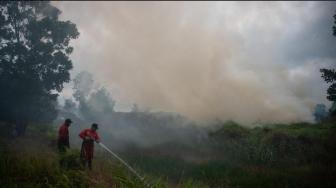
Kalimantan fires: Indonesian Member of Parliament urges government to step up emergency response
He said the move was increasingly urgent as the fires continued to spread and disrupt various aspects of people's lives.
news

He said the move was increasingly urgent as the fires continued to spread and disrupt various aspects of people's lives.
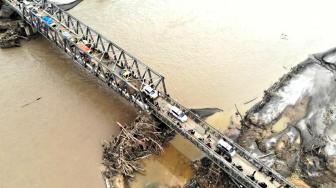
Abdul Muhari of BNPB said the restored land connection will speed up the movement of people and goods, including the distribution of humanitarian aid.

Indonesia is building a green industrial park to produce batteries for Electric Vehicles (EV) in Bulungan, North Kalimantan, which is claimed to be the world's largest green industrial park in the world.
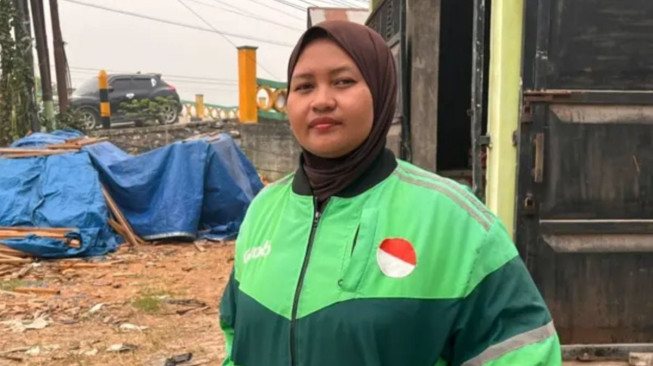
The threat posed by smoke from forest and land fires in Indonesia has become more than an ecological crisis. It is also disrupting the livelihoods of daily-wage workers. Online motorcycle taxi drivers in Kalimantan and Sumatra are being forced to endure serious health problems to earn a living, as their incomes fall by more than half.
Thick plumes of smoke are reducing visibility while exposing motorcyclists on the roads to harmful pollutants. Many continue working despite severe headaches and difficulty breathing.
The plight of these informal-sector workers highlights the real economic cost of recurring environmental disasters for low-income communities. The burden is compounded by rising medical expenses and household costs, even as orders dwindle.
Reduced public activity outdoors has directly cut ride-hailing drivers' earnings. As schools and offices switch to remote activities, the streets are suddenly left with fewer potential passengers.
In Pekanbaru, a 63-year-old ride-hailing driver, Imrayedi, is forcing himself to work despite the toxic haze.
“I am short of breath and have headaches from breathing the air these days. But whatever happens, I still have to work,” he was quoted as saying by the BBC.
Exposure to harmful particles can damage the respiratory system and cause daily physical discomfort. The black residue accumulating in the respiratory tract is a stark indication of the poor air quality in affected areas.
A similar situation is facing Emlya Dhea Francyska, a female ride-hailing driver in Banjarmasin who shares a motorbike with her husband to deliver food orders. The sharp drop in orders means the couple can take home only tens of thousands of rupiah a day.
Rere, as she is known, described being unable to take time off at home even as air quality deteriorated.
“No matter how bad the haze gets, we still have bills to pay. There is no assistance from the government.”
The crisis underlines why the response to forest and land fires must go beyond extinguishing blazes. The government needs to provide social protection and free healthcare to help affected communities withstand the economic shock.
Haze Crisis Hits Small Businesses Too
The economic losses extend beyond ride-hailing drivers to microbusiness owners, including a soto vendor in Palangka Raya. Khotim Octavia, 46, said her stall's daily turnover had fallen sharply, from millions of rupiah to just a few hundred thousand.
She described how customers had stopped visiting since thick haze enveloped the area.
“Since the haze started, even on the busiest days I only make around Rp500,000. There have even been days when I made just Rp200,000.”
Ronny Sasmita, a senior analyst at the Indonesia Strategic and Economics Action Institution (ISEAI), said daily-wage workers were among those most vulnerable to financial collapse. They face the loss of income while still having to meet everyday expenses.
The Center of Economic and Law Studies (CELIOS), a research institute, has estimated that the national economic losses caused by the disaster have reached tens of trillions of rupiah. Transport, logistics and trade have been disrupted, while overall labour productivity has also declined.
Dangerous Air Quality Puts Public Health at Risk
Air quality in parts of Kalimantan and Sumatra has reached levels that pose serious risks to human health. Figures from Indonesia's Air Pollutant Standard Index (ISPU) show that some locations have recorded alarming readings, reaching the most hazardous categories.
Thousands of residents have reportedly suffered acute respiratory infections (ARI), including tens of thousands of children under five. Local health authorities have recorded an increase in patients seeking treatment at primary healthcare facilities for respiratory complaints.
The Indonesian Ministry of Health has reported that millions of people in West Kalimantan, Central Kalimantan, South Kalimantan and Riau have been directly exposed to smoke from burning. Respiratory illnesses continue to rise as fires remain unextinguished.
The crisis exposes the vulnerability of low-income communities caught in a cycle of recurring environmental disasters. Without concrete assistance, workers who earn their living on the streets will continue to put their health and safety at risk simply to survive.


