


Prabowo Targets 8% Growth with Massive Job Creation Drive
Prabowo highlighted the significant employment potential of the MBG programme.
news

Prabowo highlighted the significant employment potential of the MBG programme.
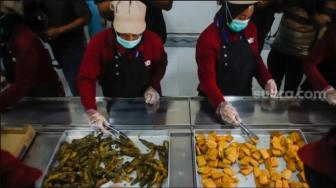
The large-scale evaluation followed Prabowos direct inspections, as well as public feedback regarding the programmes implementation on the ground.
President Prabowo Subianto is exploring drastic government austerity measuresdrawing inspiration from Pakistan's recent "critical measures"to shield Indonesia from the economic fallout of ongoing global conflicts.
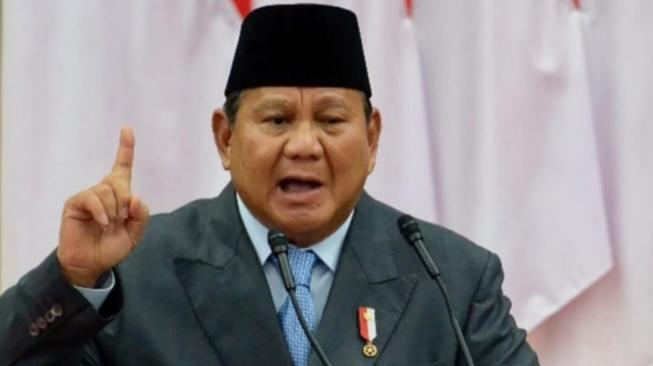
Amid a world rattled by energy shortages, fuel queues, and creeping uncertainty, gratitude, it seems, remains in steady supply, at least within Indonesia’s political elite.
At a party gathering in Jakarta, Zulkifli Hasan, chairman of the Partai Amanat Nasional, offered precisely that: thanks. Not for the crises unfolding across continents, but for what he described as the foresight of President Prabowo Subianto.
Speaking at the party’s national working meeting, Hasan painted a bleak global picture, energy emergencies in the Philippines, fuel queues stretching across India and Pakistan, and shortages rippling through parts of Latin America and Australia.
Yet, from this catalogue of instability emerged a curious conclusion: Indonesia, he argued, should feel fortunate.
“We should be grateful,” Hasan said, pointing to what he framed as Prabowo’s long-dismissed warnings about conflict, remarks once met with scepticism, even within his own ranks. Now, he suggested, those warnings appear vindicated.
The irony was difficult to miss. A global crisis, framed not as a cautionary tale, but as retrospective proof of political vision.
Hasan also revisited his party’s long-standing loyalty. For 15 years, PAN had backed Prabowo through repeated electoral defeats, persisting through what he described, half in jest, as a prolonged losing streak. Victory, when it came, was framed less as a political shift than as a reward for endurance.
Public doubt, he added, had also aged poorly. Ideas once dismissed, food self-sufficiency, energy independence, industrial downstreaming, now stand, in his telling, as urgent necessities in a world gripped by scarcity.
Indonesia, he argued, can no longer afford the comfort of imports that “lulled” the nation into dependency. The solution lies in sovereignty: producing its own food, securing its own energy, processing its own resources.
And here, the narrative circles back to power.
For PAN, gratitude is not merely philosophical. It is institutional. Many of these strategic programmes now fall under the coordinating ministry for food affairs, led by Hasan himself.
In a moment defined by global strain, the message was clear: crisis, for some, is not only a warning, but also a validation.


