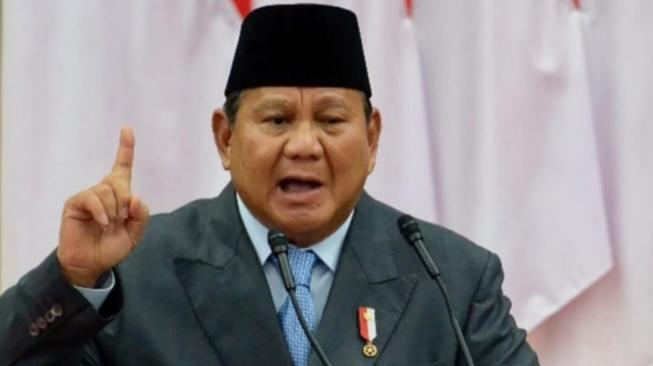
As the economic tremors of conflicts in Eastern Europe and the Middle East continue to ripple across the globe, the mood inside Jakarta’s State Palace has turned highly pragmatic. For President Prabowo Subianto, weathering the storm requires more than just cautious optimism; it requires taking a hard look at how nations on the brink are surviving.
During a Plenary Cabinet Meeting on Friday (13/3/2026), Prabowo introduced an unexpected case study to his ministers: Pakistan.
Framing the South Asian nation's drastic austerity policies as a mirror for Indonesia to reflect upon, the President detailed what he described as "critical measures."
"This is Pakistan's approach. I am bringing it up merely as a comparison," Prabowo told his cabinet. "They consider their current situation highly critical. To them, the urgency is akin to how we treated the Covid-19 pandemic."
The measures Pakistan has adopted read like a wartime economic playbook. Prabowo outlined how the country has mandated a 50 percent Work From Home (WFH) policy across both government and private sectors, essentially slashing the workweek to just four days.
But the tightening belt doesn't stop at the office door. It extends to the very top of the political food chain.
In a move designed to protect the most vulnerable, Pakistan has slashed the salaries of state officials, including cabinet members and parliamentarians, redirecting those funds to welfare programs.
The bureaucratic luxuries of government have also been grounded. Fuel supplies for all ministries have been heavily rationed, with 60 percent of official state vehicles parked indefinitely to force efficiency.
"They have halted all purchases of air conditioners, vehicles, and furniture across all government institutions for an undetermined period," Prabowo noted. Furthermore, overseas official trips have been entirely banned, budgets for ceremonial events have been gutted, higher education has been forced online, and schools have been temporarily closed.
While Prabowo was quick to clarify that he was not blindly copying Islamabad's playbook, the underlying message to his ministers was crystal clear: the era of bureaucratic excess must end.
"This is just an example," he emphasized. "But in the coming days, I believe we need to study this matter closely. We must push ourselves to practice profound austerity."
The Pursuit of a Zero Deficit
The President's call for extreme frugality might suggest an impending domestic crisis, but Prabowo's long-term outlook remains fiercely bullish. He projected that within the next two to three years, Indonesia will emerge as a formidable global economic powerhouse.
However, reaching that peak requires a meticulously balanced ledger today. His immediate fiscal goal is to prevent the State Budget (APBN) deficit from widening.
"We hope to maintain our deficit so it does not increase. In fact, our ultimate dream—if possible—is to have no deficit at all," Prabowo declared, describing a perfectly balanced budget as the ideal scenario for the nation's future.
Yet, before Indonesia can dream of a zero-deficit reality, the government must wage war on an insidious domestic enemy: financial leakage.
With a tone of unwavering resolve, Prabowo reminded his cabinet that the nation's wealth is still being bled dry by systemic inefficiencies and corruption.
"We must always remember that we are still facing massive leakage, inefficiency, under-invoicing, under-counting, and administrative manipulation. The leaks are huge," the President warned.
"I apologize, but I will continue to speak about this issue relentlessly. And we have already begun taking the steps to stop it."