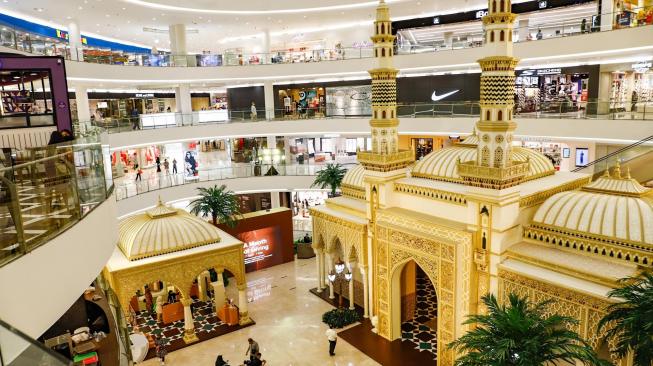
The scent of new fabrics and the distant hum of Middle Eastern melodies drift through the air at Central Park Mall in West Jakarta. It is the weekend, and the sprawling shopping center has transformed into a sea of humanity.
Beneath an elegant installation of blue, gold, and white mosque domes—part of the mall’s “Raya Reflection” theme—thousands of families navigate through crowded aisles. With Eid al-Fitr just days away, the psychological urge to renew oneself through new clothes, fresh home decor, and festive treats has hit a fever pitch.
This vibrant scene is the beating heart of Indonesia's retail calendar. According to the Indonesian Retail Entrepreneurs Association (Aprindo), the second quarter—fueled by Ramadan and Eid—typically sees a 30 to 40 percent spike in retail sales compared to regular months. The catalyst is the highly anticipated Tunjangan Hari Raya (THR), the mandatory holiday bonus that injects fresh purchasing power into the pockets of the middle class.
For shoppers like Tirta Iva, the mall remains the ultimate battlefield for holiday preparation. “You can really feel that Eid is close. Everyone is hunting for clothes and household necessities,” she says, clutching several shopping bags.
For Tirta, the physical mall offers something the internet cannot: atmosphere and assurance. “There are so many discounts right now. I prefer coming to the mall because it’s air-conditioned, comfortable, and I can see my options directly.”
The Ultimate 'Ngabuburit' Oasis
Beyond mere transactions, Jakarta’s mega-malls have evolved into vital communal spaces, particularly during the fasting month. They have become the modern urbanite’s preferred sanctuary for ngabuburit—the Indonesian tradition of killing time while waiting for the sunset call to prayer.
In a metropolis infamous for its suffocating traffic and air pollution, an enclosed, climate-controlled mall is a logistical lifesaver. It is a "one-stop destination" where families can window shop, let their children play, and seamlessly transition into breaking their fast without having to brave the gridlock outside.
“I love spending my ngabuburit time here,” says Syifa Rahmawati, a young mall-goer. “I can window shop even if I don’t buy anything. When it’s time to break the fast, the food is right here. It’s effortless.”
This convenience creates a massive foot traffic surge as evening approaches. Parman, a restaurant worker at Central Park, notes the daily rhythm. “We are busiest on the weekends, but during Ramadan, the real rush hits every day around 5:30 PM, right before Iftar.”
Data from the Indonesian Shopping Center Tenants Association (APPBI) confirms this, noting a 15 percent increase in mall visitors during the holy month.
The 'ROJALI' Phenomenon: A Retail Dilemma
However, beneath the festive cheer and record-breaking foot traffic lies a quiet crisis for retail workers. The mall may be packed, but not everyone is there to open their wallets.
A growing consumer trend has birthed two viral acronyms in Indonesia: ROJALI (Rombongan Jarang Beli, or "The Group That Rarely Buys") and ROHANA (Rombongan Hanya Nanya, or "The Group That Only Asks").
Squeezed by rising inflation and the increasing cost of basic goods, many Jakartans are tightening their belts. They still visit the mall to soak in the festive atmosphere, but when it comes to purchasing, they pull out their smartphones. The mall has effectively become a physical catalog—a place to touch the fabric, try on the size, and compare prices, only to execute the final transaction on an e-commerce app offering steep discounts and free shipping.
Resty, a pragmatic shopper, sees nothing wrong with this approach. “When prices are rising, we have to think twice before buying at the mall. Sometimes people just want to be in a crowded, festive place. It’s completely normal to visit a mall and not buy anything.”
But for retail employees stationed on the floor, the ROJALI phenomenon is an agonizing reality. Kuzen, a beauty store employee at Central Park, watches daily as potential customers test products and then walk away to buy them online.
“Online shopping is definitely cheaper and more flexible. But for us on the floor, it has a massive impact,” Kuzen admits, his frustration evident. “We have daily offline sales quotas to meet. When people only use our store to browse, our revenue takes a hit.”
As the Eid countdown enters its final days, Jakarta’s malls remain a fascinating theater of modern consumerism. They are physical monuments to holiday joy and togetherness, yet simultaneously battlegrounds where brick-and-mortar retail fights to survive against the invisible, cheaper allure of the digital cart.