


BRICS Membership Must Benefit Indonesian People: Legislator
Member of the House of Representatives (DPR) believes that Indonesias decision to join the BRICS economic bloc as a full member is a strategic move.
news

Member of the House of Representatives (DPR) believes that Indonesias decision to join the BRICS economic bloc as a full member is a strategic move.

The House's Commission III also agreed to periodic examinations of police personnel's psychological condition to prevent the misuse of firearms.

The maternal and child welfare bill is expected to become a new weapon for the Indonesian government to tackle stunting problems.
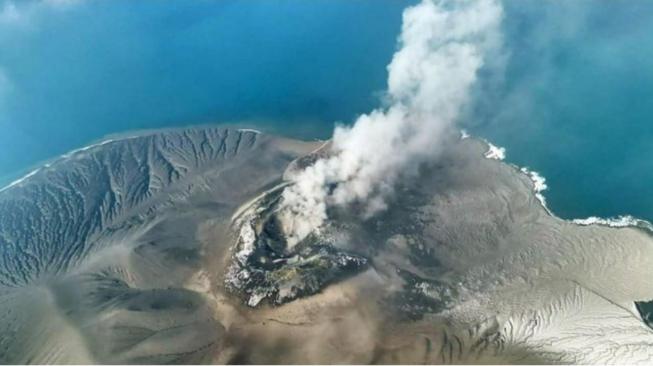
Indonesia sits along the Pacific Ring of Fire, making it one of the countries most exposed to volcanic hazards. With dozens of active volcanoes spread across the archipelago, eruptions can threaten communities not only through lava and pyroclastic flows, but also through volcanic ash that can disrupt health, transportation, agriculture, water supplies and local economies.
Against this backdrop, a member of Commission VIII of the House of Representatives (DPR RI), Maman Imanul Haq of the Partai Kebangkitan Nasional (PKB), has urged the government to strengthen its preparedness for potential eruptions at several volcanoes across Indonesia.
He said rapid and accurate disaster mitigation measures are crucial to reducing casualties and limiting material losses.
Maman expressed particular concern over recent volcanic activity. Mount Anak Krakatau is currently at Alert Level II, while Mount Semeru, Mount Ibu in North Maluku and Mount Ili Lewotolok in East Nusa Tenggara are at Alert Level III.
“Volcanic eruptions cannot always be prevented, but their risks can be reduced. The government must therefore ensure a strong early warning system, rapid and accurate information, and protection that truly reaches communities,” Maman said in Jakarta on Monday (Sept. 7, 2026).
From response to prevention
Maman said disaster mitigation should focus on prevention rather than simply responding once an eruption has already occurred.
He called on the government to ensure that official information channels operate effectively, particularly as misinformation and unverified claims can quickly spread through social media.
“Every development in a volcano’s status and its potential hazards must be communicated quickly, simply and in a way that people can easily understand through official government channels. People should not have to rely on social media information that may not be accurate,” he said.
He also stressed the need for stronger coordination among agencies, including regional disaster management agencies (BPBD), the National Disaster Management Agency (BNPB), the Indonesian Military and Police, local governments and volunteers.
Preparing for impacts beyond the eruption
For Maman, preparedness should not focus solely on the immediate hazards of an eruption, such as pyroclastic flows and lava. The government also needs to anticipate the wider consequences for communities.
“The government must also anticipate the impacts of eruptions beyond public safety, including health, transportation, agriculture, access to clean water and people’s economic activities,” he said.
Such an approach would allow authorities to prepare not only evacuation plans, but also measures to maintain essential services and protect livelihoods when volcanic activity disrupts daily life.
Maman also urged residents living around volcanoes to remain vigilant and follow basic health precautions against volcanic ash.
He advised residents to reduce outdoor activities, keep doors and windows closed to limit ash entering homes, and protect drinking-water sources and food from contamination.
“Ash exposure can be reduced by taking these basic precautions while continuing to follow official instructions on volcanic activity and evacuation,” he said.


