


Transfer of High-Profile Corruption Cases Raises Questions Over Legal Authority, Expert Says
An anti-corruption expert from Indonesia's Gadjah Mada University has questioned the decision to transfer three corruption investigations involving former senior prosecutor Febrie Adriansyah from the National Police to the Attorney General's Office (AGO), arguing that the country's anti-graft agency would be better placed to handle the cases.
The investigations, which involve alleged corruption and money laundering, were handed over to the AGO while police inquiries were still ongoing. The transfer followed an agreement between the National Police's Corruption Crime Corps (Kortastipidkor) and the AGO.
Zaenur Rohman, a researcher at the University of Gadjah Mada's Centre for Anti-Corruption Studies (PUKAT UGM), said the move raises legal concerns because Indonesian law does not explicitly authorise the AGO to continue an investigation initiated by the police.
Instead, he argued, the cases should be taken over by the Corruption Eradication Commission (KPK), which has statutory authority to assume control of corruption investigations under certain conditions.
"If the KPK handled the case, the legal basis would be much stronger because its authority is clearly regulated under the KPK Law," Zaenur told Suara.com on Monday.
He said the legal requirements for the KPK to intervene appeared to have been met, particularly given the risk that the investigations could lose momentum.
Beyond the legal question, Zaenur argued that assigning the cases to the KPK would help strengthen public confidence because the commission is institutionally independent from both the police and the prosecution service.
"If the Attorney General's Office investigates one of its own senior officials, the public will naturally question whether the process can be completely impartial," he said. "The KPK is a third party with no direct institutional interest in the case."
Zaenur also suggested that the decision to transfer the investigations may have been intended to ease tensions between the National Police and the Attorney General's Office rather than to strengthen law enforcement.
"In my view, this is a settlement between two law enforcement institutions aimed at ending the dispute," he said. "However, that settlement lacks a strong legal foundation and could create legal problems in the future. Its accountability will also be questioned."
Earlier, the National Police confirmed that they had transferred three corruption and money laundering cases to the Attorney General's Office after naming Febrie Adriansyah and businessman Don Ritto as suspects.
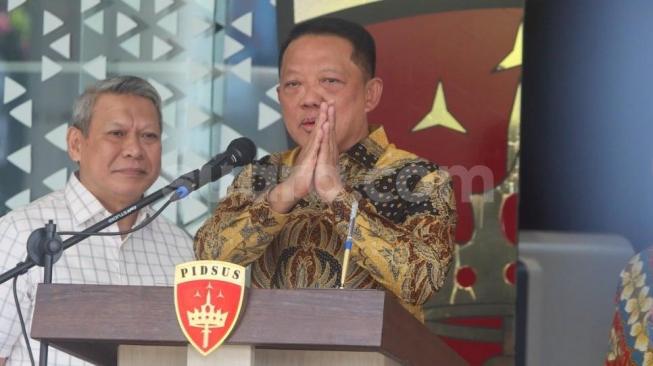
Head of the National Police's Corruption Crime Corps, Inspector General Totok Suharyanto, said the transfer reflected institutional co-operation between the police and the AGO in handling the investigations.
According to police, Don Ritto has been charged under Indonesia's Anti-Money Laundering Law for allegedly laundering proceeds of corruption. He has been held at the Jakarta Metropolitan Police detention centre since 10 July.
Febrie Adriansyah, meanwhile, has been named a suspect in alleged corruption and money laundering linked to the handling of legal proceedings involving the state-owned insurance company PT Asabri and other corruption cases involving public officials.
He is accused of violating Indonesia's Anti-Corruption Law and the Anti-Money Laundering Law. The legal process against him is continuing under the Attorney General's Office following the transfer of the case files.


