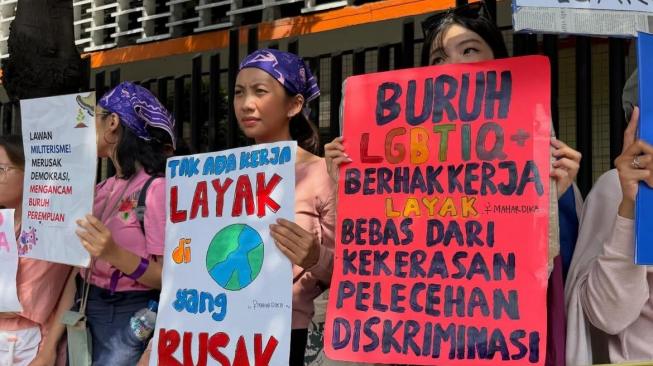
TheIndonesia.co - The Indonesian Women's Alliance (Aliansi Perempuan Indonesia) has condemned what it describes as a rise in violence and persecution against people of diverse sexual orientations, gender identities and expressions (SOGIE) in Indonesia.
The organisation argues that, over the past two years, discrimination has shifted beyond social prejudice towards state policies that it says increasingly legitimise stigma against LGBT people.
In a statement released on 19 July 2026, the alliance identified several government policies that it believes have worsened the situation for LGBT communities.
These include Presidential Regulation No. 111/2025 on the General National Defence Policy, which classifies the "spread of LGBT culture" as a non-military threat, the new Criminal Code (KUHP), which came into force in January 2026, and proposals for anti-LGBT regional by-laws in several parts of the country.
The organisation also highlighted what it described as discriminatory practices, including raids on private gatherings, operations targeting venues associated with LGBT communities, intimidation on university campuses, restrictions on student media, and disciplinary action against students based on their sexual orientation or gender expression.
According to the alliance, these developments suggest that the state is failing to fulfil its obligation to protect all citizens from discrimination.
The statement argues that policies portraying LGBT people as a threat risk legitimising vigilante violence, reinforcing persecution by law enforcement authorities, and encouraging unbalanced media coverage that relies primarily on official sources while excluding the voices of those directly affected.
The alliance added that queer women and transgender women face heightened vulnerability because they experience discrimination based on both gender and sexual or gender identity.
The alliance also criticised approaches that frame raids as measures to prevent the spread of disease. It said criminalisation and stigma may discourage people at higher risk from seeking HIV testing, treatment for sexually transmitted infections, and other healthcare services for fear of arrest or public humiliation.
The confiscation of contraceptives during some raids, it argued, also runs counter to public health and reproductive health principles.
According to the organisation, these policies are inconsistent with protections guaranteed under Indonesia's 1945 Constitution, the 1999 Human Rights Law, and a number of international human rights treaties ratified by Indonesia. It argues that the rights to peaceful assembly, employment, healthcare and freedom from degrading treatment are constitutional rights that should not be restricted on the basis of sexual orientation or gender identity.
In its statement, the Indonesian Women's Alliance called on the government to review what it describes as discriminatory policies, halt the drafting of anti-LGBT regional regulations, end raids conducted without a lawful basis, and encourage media organisations to provide balanced coverage that does not reinforce stigma against people of diverse sexual orientations and gender identities.
Latest news
Will President Prabowo Reshuffle His Cabinet in August?
Nadiem Makarim's Appeal Against Corruption Conviction to Begin on 5 August
Transfer of High-Profile Corruption Cases Raises Questions Over Legal Authority, Expert Says
Reports of Large Group at Jakarta Police HQ Draw Attention During Corruption Investigation
