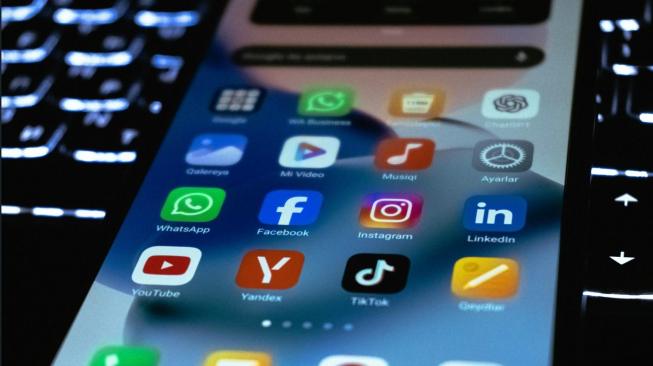
TheIndonesia.co - Indonesia’s plan to partner with so-called “homeless media” — independent digital content creators operating outside conventional newsroom structures — has drawn criticism from academics and lawmakers over concerns about propaganda, weak accountability, and threats to media independence.
Communication expert from Universitas Islam Indonesia, Masduki, said the move by the Indonesian Government Communication Agency (Bakom) under its head Muhammad Qodari carried contradictory implications.
On one hand, he said the initiative could support the sustainability of emerging digital media. On the other, it risked undermining journalistic independence through state influence.
“Governments usually do not provide funding for free. The goal is often to promote government programs positively,” Masduki told Suara.com on Thursday.
He warned the policy could become a form of soft intervention aimed at shaping public opinion and reducing critical reporting against the government.
“What Qodari is doing has the potential to open space for the co-optation of homeless media, whose reports have recently attracted significant public attention,” he said.
Masduki also described the trend as part of a broader pattern of “digital authoritarianism,” where governments attempt to control information flows indirectly rather than through overt censorship.
According to him, many homeless media platforms still rely on highly personal management systems without standardized editorial oversight, making them more vulnerable to political influence compared to mainstream media organizations with stronger editorial mechanisms.
“Don’t let this become merely personalized media without public accountability and correction mechanisms,” he said.
Separately, Indonesian lawmaker Amelia Anggraini also raised concerns about the initiative, although she acknowledged that engaging new media platforms reflected the rapid evolution of citizen journalism in the digital era.
She noted that homeless media now play a major role in shaping public opinion across platforms such as TikTok, Instagram, X, and YouTube.
“These platforms often move faster than conventional media, but many still lack editorial structures, verification mechanisms, and clear journalistic ethics standards,” Amelia said.
She supported efforts to improve professionalism among new media actors but stressed that government partnerships must not create conflicts of interest or weaken public accountability.
“At the same time, this must be supervised carefully so it does not become a space for spreading information without accountability,” she said.
Amelia added that Indonesia’s parliament is currently attempting to update regulations to keep pace with the rapid development of digital media while avoiding excessive restrictions on freedom of expression.
Tag
Latest news

Hundreds of Gun-Shaped Objects Found at South Jakarta School: How Did They Get There?
Jatim Media Summit 2026 Drives Media Transformation in East Java
Former BI Governor Perry Warjiyo May Be Questioned in Corruption Inquiry

Prabowo defends criticism of media, says Indonesia still has a 'Londo Ireng' mentality