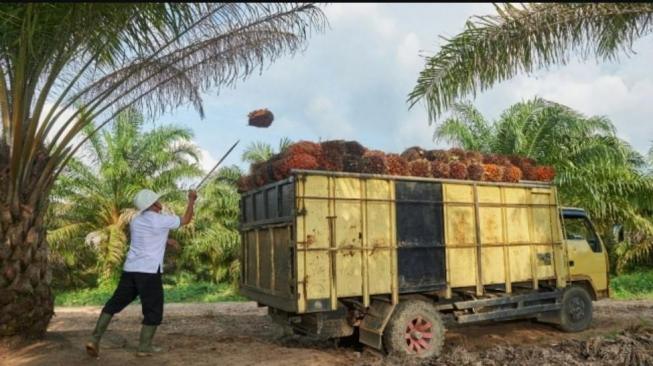
TheIndonesia.co - Indonesia plays a vital role as the world’s largest producer and exporter of crude palm oil (CPO). However, behind this dominance lies a striking paradox: neighbouring Singapore—despite having no palm plantations—captures significantly greater economic value from the commodity.
Data shows that Indonesia accounts for around 40.37 per cent of global supply, with total exports reaching 53.9 million tonnes over the 2015–2024 period. Yet a substantial share of the value added from palm oil trade is enjoyed by intermediaries based in Singapore.
“This phenomenon is a bitter reality for a strategic national industry. Our flagship commodity is generating more added value for brokers in Singapore than for domestic producers,” said Christiantoko, Executive Director of the NEXT Indonesia Center, in Jakarta on Sunday (12 April 2026).
According to him, Singapore’s strategic position as a global trading and re-export hub allows approximately 5.69 per cent of Indonesia’s total CPO exports to flow through the city-state before being redistributed to international markets. This volume is equivalent to around 3.07 million tonnes.
Christiantoko described this flow as a “black hole” that obscures the true economic value of Indonesia’s palm oil.
An analysis by the NEXT Indonesia Center highlights a significant price gap between Indonesia’s export prices and the resale prices recorded by Singapore.
For refined palm oil products (HS 151190) in 2022, Singapore purchased from Indonesia at US$1,345 per tonne and resold it on the global market at US$1,979 per tonne—resulting in a price difference of US$634 per tonne.
He argued that this gap indicates a large portion of profits is effectively “parked” within intermediary companies in Singapore.
“The prices reported to Indonesian authorities are on average only about half of those in final destination markets such as the United States,” Christiantoko said, citing findings from his research.
He added that the situation disadvantages Indonesia, both in terms of economic value and potential state revenue.
To date, trade routes via Singapore remain a critical node in the global palm oil supply chain. Without stronger downstream industrial policies and tighter trade oversight, the added value of this key commodity risks continuing to flow abroad.
Latest news

Prabowo defends criticism of media, says Indonesia still has a 'Londo Ireng' mentality
Why Do Food Poisoning Cases Keep Happening in Indonesia's Free Meals Programme?
Former National Nutrition Agency Chief Resigns as Suspect's Lawyer Calls for Investigation

Indonesian Women's Alliance says anti-LGBT policies are fuelling discrimination