TheIndonesia.co - Indonesia's economy is showing several warning signs that resemble the early stages of a crisis, according to economist Yudistira Hendra Permana of the Universitas Gadjah Mada.
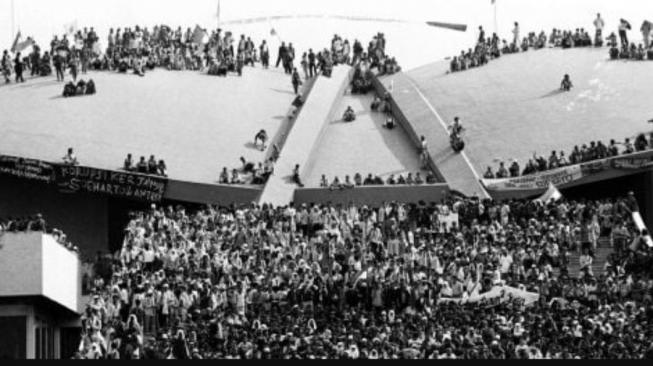
However, he argues that the current situation remains fundamentally different from the crisis that culminated in the fall of the New Order regime in 1998.
Speaking to Suara.com on Friday, Yudistira said the 1998 crisis was not solely an economic collapse. Instead, it was a multidimensional crisis driven by a combination of economic, social, political, and legal problems that had accumulated over many years.
"The 1998 crisis was not merely an economic crisis. It was a multidimensional crisis involving social, political, and legal issues all at once," he said.
According to Yudistira, today's challenges are still concentrated primarily in the economic sphere. While public criticism of the government is more openly expressed than during the New Order era, current social and political conditions have not reached the level of tension that preceded the Reformasi movement.
As a result, he believes that the prerequisites for a large-scale political transformation similar to 1998 have not yet emerged.
Nevertheless, Yudistira stressed that signs of economic distress are becoming increasingly visible. He pointed to the weakening rupiah, declining purchasing power, and sluggish investment as indicators that should not be ignored.
He also warned that social unrest could intensify if food inflation and the prices of basic necessities continue to rise. Even so, economic hardship alone is unlikely to trigger a crisis comparable to 1998 without accompanying political factors.
To illustrate the difference, Yudistira cited several major events that contributed to the political climate before Reformasi, including the **Kudatuli** incident and the conflict situation in **Aceh** under the Military Operations Area (DOM) policy.
Those events, he said, formed part of the broader conditions that eventually drove significant political change.
Yudistira noted that comparable conditions are not currently evident. He added that many Indonesians remain uncertain about who would assume leadership if a sudden transfer of power were to occur.
According to him, public confidence in an alternative leadership figure is one of the key differences between today's situation and the circumstances surrounding the 1998 transition, when many people believed there was a clear path forward for national leadership after political change.
Latest news
Prabowo defends criticism of media, says Indonesia still has a 'Londo Ireng' mentality

Why Do Food Poisoning Cases Keep Happening in Indonesia's Free Meals Programme?
Former National Nutrition Agency Chief Resigns as Suspect's Lawyer Calls for Investigation
Indonesian Women's Alliance says anti-LGBT policies are fuelling discrimination