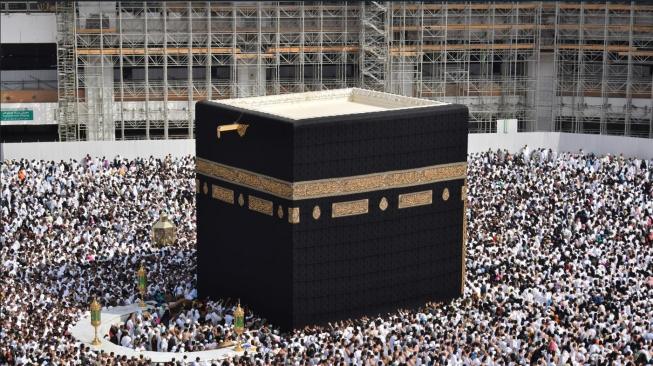
TheIndonesia.co - The situation in the Middle East remains uncertain amid escalating tensions involving the United States and Israel with Iran. This has raised pressing questions over the fate of Indonesia’s 2026 Hajj pilgrimage—will it be cancelled, or will it proceed as planned?
The Indonesian government, through the Ministry of Hajj and Umrah, has begun addressing these concerns with the House of Representatives (DPR RI), particularly Commission VIII, to assess the potential impact on preparations for the 2026 Hajj.
A special meeting was held on 11 March 2026 at the Parliament Complex in Senayan, Jakarta. Discussions focused broadly on emergency scenarios for organising the pilgrimage, though no final decision has been made.
Security Situation in Saudi Arabia
Following strikes by the United States and Israel, Iran reportedly launched retaliatory attacks targeting US military bases across several regions, including areas within Saudi Arabia.
Recent reports indicate that Iran carried out intensive strikes early on Friday (13 March 2026). However, at least 50 drones were intercepted by Saudi Arabia’s air defence systems.
Emergency Scenarios Prepared
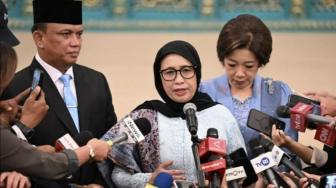
The government has signalled that preparations for the Hajj are still ongoing, while also outlining contingency plans. During a working meeting with Commission VIII, Minister of Hajj and Umrah Irfan Yusuf stressed that the safety of pilgrims remains the top priority.
He presented several scenarios, ranging from securing logistics to the possibility of cancelling departures if security risks are deemed too high. One potential outcome is that Saudi Arabia continues to host the Hajj, but Indonesia opts not to send pilgrims for safety reasons.
In such a case, the government would pursue high-level negotiations with Saudi authorities to ensure that funds already paid for accommodation, transport, and services are not forfeited, but can instead be carried forward to the 2027 Hajj without penalties.
“We need high-level diplomacy to ensure that the funds already deposited are and can be used for the 2027 pilgrimage without penalties,” Irfan said.
Protecting Pilgrims’ Funds
The government is also preparing financial safeguards for pilgrims through two main options: refunds or reinvestment.
Refunds would allow pilgrims to withdraw their payments without losing their place in the queue, while reinvestment would enable funds to remain with the government, offering higher returns over time as compensation for the delay.
Despite the uncertainty, Irfan confirmed that preparations for the 2026 Hajj are currently proceeding on schedule.
“As of today, preparations are ongoing. Our counterparts in Saudi Arabia have communicated that everything is being well prepared. We assume things are proceeding as planned,” he said.
Call for Caution
Meanwhile, Commission VIII of the DPR emphasised that the government must not overlook potential risks. While preparations should continue, a clear emergency plan is essential.
“The principle is that our pilgrims should still be able to depart. However, given the current situation, the Minister must have an emergency scenario in place,” said Commission VIII Chair Marwan.
He added that the final decision to cancel the Hajj, if necessary, lies with the President, who holds broader access to international intelligence and developments.
Decision Timeline Crucial
Observers have also urged the government to set a clear deadline. Hajj policy analyst Ade Marfuddin noted that with the first group of pilgrims scheduled to depart on 20 April 2026, a decision should be made at least 20 days in advance.
“If the first departure is on 20 April, then by 30 March the government must decide whether to proceed, find alternative routes, or take the difficult decision to postpone,” he said.
He stressed that if tensions continue to escalate, the government must prioritise safety above all else.
Protecting lives, he argued, is far more important than proceeding with the pilgrimage amid the risks of conflict.
Latest news

Jatim Media Summit 2026 Drives Media Transformation in East Java
Former BI Governor Perry Warjiyo May Be Questioned in Corruption Inquiry
Prabowo defends criticism of media, says Indonesia still has a 'Londo Ireng' mentality
Why Do Food Poisoning Cases Keep Happening in Indonesia's Free Meals Programme?