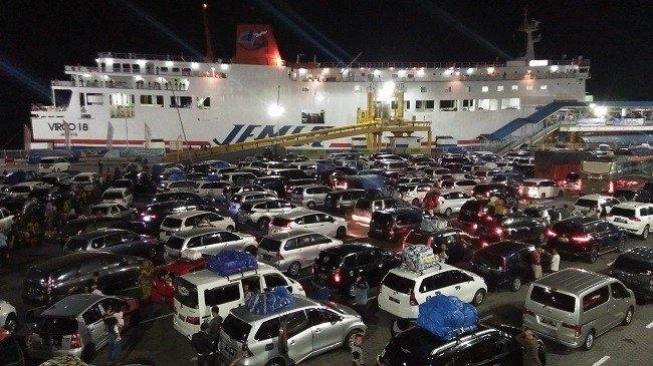
TheIndonesia.co - The Minister of Transportation, Dudy Purwagandhi, estimates that public movement during the 2026 Lebaran mudik (exodus) will exceed 143 million people.
While the figure remains vast, latest survey results indicate a slight decrease compared to last year's predictions.
The data was presented by the Minister during a working meeting with Commission V of the House of Representatives (DPR RI) at the Parliamentary Complex in Senayan, Central Jakarta, on Wednesday (11/03/2026).
"Based on survey results regarding public movement for the 2026 Lebaran transport period, approximately 50.60 per cent of the Indonesian population, or equivalent to 143.91 million people, are expected to travel," Minister Dudy stated during his presentation.
The figure of 143.91 million represents a 1.75 per cent decrease compared to the 2025 Lebaran exodus survey, which stood at 146 million people.
However, the Minister issued a crucial caveat, noting that field data often surpasses survey estimates.
"In practice, the actual movement in 2025 reached 154 million people. This indicates that public mobility during the festive period tends to exceed the figures projected in our surveys," he added.
Regarding regional distribution, Central Java is once again predicted to be the primary destination, with an estimated 38.71 million arrivals. Meanwhile, points of origin remain dominated by the densely populated provinces of Java.
"The largest movement originates from West Java at approximately 30.97 million people, followed by Jakarta and East Java," he said.
Specifically at the municipal level, East Jakarta recorded the highest departure rate with 2.56 million people, followed by the regencies of Bogor and Bekasi.
Regarding the capital’s satellite cities, the Minister highlighted high mobility from Bogor and Tangerang towards Central Java.
"Within the Greater Jakarta (Jabodetabek) area, the largest point of origin is Bogor Regency with 5.35 million people, followed by Tangerang Regency. Central Java remains the favourite destination for residents leaving the capital region," he concluded.
Traffic Anticipation and Flexible Working Arrangements
The government warns that total movement during the 2026 period could potentially exceed 150 million people. This anticipated surge has prompted authorities to prepare several policies to prevent severe congestion during peak periods.
The Coordinating Minister for Human Development and Culture, Pratikno, stated that a key strategy involves distributing travel times so the influx is not concentrated into a single window.
"One of our primary efforts to ensure a smoother, safer, and more comfortable exodus is the distribution of traveller movement. With this suite of policies, we hope to prevent a bottleneck at any specific time," Pratikno said in a statement in Jakarta on Wednesday.
While the Ministry of Transportation's survey suggests 143.9 million travellers, historical data shows actual figures are typically 10 per cent higher. "This means we could see around 155 million people on the move," he noted.
To mitigate this, the government is implementing mobility management, including Flexible Working Arrangements (FWA) on 16–17 March and 25–27 March 2026, alongside school holiday adjustments starting from 16 March and designated collective leave days (cuti bersama).
In addition to timing strategies, the government is preparing traffic engineering and operational support throughout the period.
Furthermore, authorities are on high alert regarding potential extreme weather. According to the Meteorology, Climatology, and Geophysics Agency (BMKG), parts of Indonesia still face the risk of moderate to heavy rainfall.
"We must remain vigilant against wet hydrometeorological disasters, which the BMKG categorises as moderate to high risk in several regions," Pratikno warned.
Anticipatory measures include weather modification operations, the readiness of 191 BMKG Technical Operation Units, and the National Police’s 'Operation Ketupat', scheduled for 13–26 March 2026.
An integrated command post involving various ministries and agencies has also been established to ensure the flow of traffic remains managed.
Regarding travel safety, the government has commenced health screenings for public transport drivers. Pratikno confirmed that initial checks have been conducted on 338 bus drivers at various terminals and depots in Central and West Java.
"Screenings include blood pressure, blood sugar, and tests for alcohol and narcotics," he said.
More than 2,700 health service posts will be stationed along the major travel routes to assist the public.
Furthermore, the government has reminded citizens to remain cautious of infectious diseases amid high mobility, specifically mentioning measles.
"We urge all citizens to ensure measles immunisations are up to date, particularly for children, and to maintain hygiene standards during their journey," Pratikno added.
The government is also providing auxiliary services, including thousands of 'traveller-friendly' mosques, well-equipped rest areas, and guaranteed fuel supplies and electric vehicle (EV) charging infrastructure along primary routes.
Pratikno expressed his hope that the public would follow the instructions of officers on the ground and stay informed through official channels.
"We ask for cooperation and patience from all those travelling. Please follow the advice of our officers and monitor official updates regularly," he concluded.
Latest news

Prabowo defends criticism of media, says Indonesia still has a 'Londo Ireng' mentality

Why Do Food Poisoning Cases Keep Happening in Indonesia's Free Meals Programme?

Former National Nutrition Agency Chief Resigns as Suspect's Lawyer Calls for Investigation

Indonesian Women's Alliance says anti-LGBT policies are fuelling discrimination